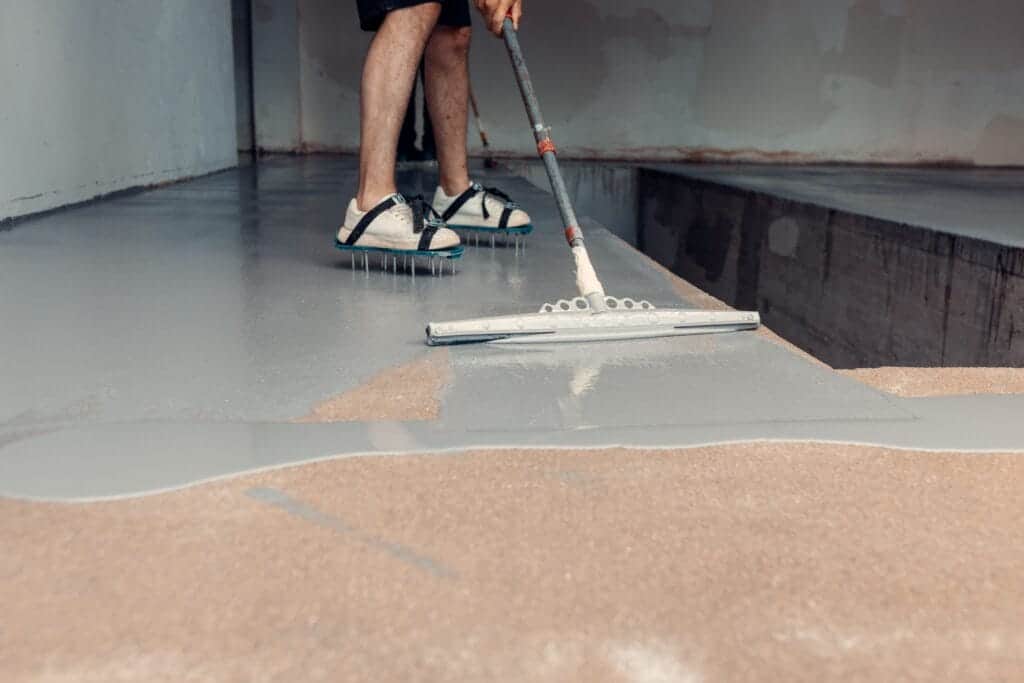
A coated garage floor changes how the whole space feels. It’s brighter, easier to clean, shrugs off oil and tire marks, and makes a garage gym or workshop feel finished. But prices are all over the place, from a $150 kit at the home improvement store to quotes north of $5,000.
Here’s what an epoxy garage floor actually costs in the Orlando area, how epoxy compares with polyaspartic in our heat and sun, and the questions that separate a floor that lasts from one that peels.
Quick answer: epoxy garage floor cost in Orlando
Professionally installed garage floor coatings are priced by the square foot. Typical ranges in the Orlando market:
| Garage size | Approx. floor area | Typical installed range |
|---|---|---|
| One-car | About 250 sq ft | $1,000–$2,000 |
| Two-car | About 400–500 sq ft | $1,800–$4,000 |
| Three-car | About 600–750 sq ft | $2,700–$5,500 |
Per square foot, an epoxy-only system generally runs about $3 to $7. Systems with a polyaspartic topcoat, or full polyaspartic floors, generally run about $5 to $12. Where your project lands depends on the condition of the concrete, the finish you choose, and the coating system.
What drives the price?
Surface prep. This is the biggest factor in both cost and longevity. A professional install starts with diamond grinding the concrete to open up the surface so the coating can bond. Skipping or shortcutting prep is the number one reason floors peel.
Crack and spall repair. Cracks, chips, and pitted spots need to be filled and ground flat first, or they’ll show through the new floor. A garage with a lot of repair work costs more than a clean, newer slab.
Finish. Solid color is the most affordable. A full decorative flake broadcast, the most popular choice for garages, adds material and labor but also hides dust and gives better grip. Metallic finishes are the most labor-intensive and the most expensive.
Coating system. Epoxy-only, epoxy with a polyaspartic topcoat, or full polyaspartic. More on that below.
Extras. Coated stem walls, stair landings, and anti-slip additive all add to the total.
Epoxy vs. polyaspartic in Florida
Both are tough, two-part floor coatings. They behave differently in a Florida garage, though:
| Epoxy | Polyaspartic | |
|---|---|---|
| Typical installed cost | About $3–$7 per sq ft | About $5–$12 per sq ft |
| UV / sunlight | Can yellow or amber over time where sun hits it | UV-stable, holds its color |
| Cure time | Foot traffic in about a day, cars in several days | Foot traffic in hours, cars often in a day or two |
| Bond and build | Excellent adhesion, builds a thick base coat | Thinner coats, harder and more abrasion-resistant |
| Hot tires | Lower-quality epoxies can lift under hot tires | Better heat and hot-tire resistance |
Many professional installers now use a hybrid system: an epoxy base for strong adhesion and thickness, a decorative flake layer, then a polyaspartic clear topcoat for UV stability and durability. For an Orlando garage where the door is open a lot and the afternoon sun reaches the floor, that combination is often the sweet spot between cost and long-term looks.
Florida-specific things to ask about
- Moisture in the slab. Central Florida’s high water table and humidity mean many slabs push moisture up through the concrete. Too much moisture under a coating causes bubbling and peeling. A good installer tests for it and adjusts the primer or system.
- Hot tire pickup. On a July afternoon, tires coming off the road are hot enough to soften cheap coatings and pull them up. Professional-grade systems are built to resist this.
- Sun exposure. If your garage faces west or the door stays open while you work out or tinker, UV stability matters.
- Humidity and cure. High humidity affects how coatings cure. Experienced crews plan around the weather.
Can you fix cracks before coating?
Yes, and you should. Hairline shrinkage cracks are normal in Florida slabs. They’re filled with a repair compound and ground flat before coating so the finished floor looks seamless. Larger cracks that are still moving, or areas where the slab has sunk, may point to a structural issue that should be evaluated first. Coating over an active structural crack won’t stop it from reappearing.
How long does an epoxy garage floor last?
A professionally installed, properly prepped residential floor commonly lasts 10 to 20 years with normal use. DIY roll-on kits are much thinner and often start peeling within a year or two, especially under hot tires. The difference almost always comes down to surface prep and coating thickness.
DIY kit or professional install?
A DIY kit can make sense for a lightly used workshop floor if you’re comfortable with a lot of prep work. For a garage you park in every day, professional installation usually pays for itself. Pros use industrial grinders, higher-solids coatings, and a full broadcast flake layer that a weekend kit can’t match, and they stand behind the work.
Make the most of your upgraded garage
A new floor pairs well with a couple of other upgrades. If you’re turning your garage into a gym, workshop, or hangout space, a retractable garage door screen lets you open the door for airflow without the bugs. And if the door itself looks dated next to your new floor, see our guide to new garage door costs in Orlando.
Get an epoxy floor quote
Grade A Garage Doors installs flake, metallic, and solid-color garage floors across Orlando. We’ll look at your slab, walk you through the options that fit your budget and how you use the space, and give you a clear, upfront price.
We serve homeowners throughout the metro, including Lake Nona, Winter Park, Oviedo, Baldwin Park, and Maitland.
See our epoxy garage floor installation service →
Or call (407) 285-4220, 7 days a week, 7am–7pm.
Frequently Asked Questions: Epoxy Garage Floors
How much does it cost to epoxy a two-car garage in Orlando?
Most two-car garages are about 400 to 500 square feet, and professionally installed coatings typically run $1,800 to $4,000 depending on slab condition, the finish you choose, and whether the system uses a polyaspartic topcoat.
Is polyaspartic better than epoxy for a Florida garage?
Polyaspartic is UV-stable, cures much faster, and handles heat and hot tires better, which suits sunny Florida garages. Epoxy bonds extremely well and costs less. Many installers use an epoxy base with a polyaspartic topcoat to get the benefits of both.
How long does an epoxy garage floor last?
A professionally installed residential floor with proper surface prep commonly lasts 10 to 20 years. Thin DIY kits often start to peel within a year or two, especially under hot tires.
How soon can I park on a new garage floor coating?
With a polyaspartic topcoat, vehicles can often return within a day or two. Epoxy-only systems usually need several days before parking. Your installer will give you exact timing based on the products and the weather.
Can epoxy be applied over a cracked garage floor?
Yes, once the cracks are repaired. Hairline cracks are filled and ground flat before coating. Large or moving cracks, or sunken areas, should be evaluated first because coating will not fix a structural problem.