You press the button, the door starts down, and then it stops and heads right back up. Or it doesn’t move at all. A garage door that won’t close is one of the most common calls we get across Orlando, and the good news is that most of the time the cause is one of a short list of usual suspects. Several of them you can check yourself in a few minutes.
Below are the eight causes our technicians run into most often, what’s safe to check on your own, and when it’s time to put the stepladder away and call a pro.
Start here: the 60-second checks
Before digging into sensors and settings, rule out the simple stuff:
- Lock or vacation mode. Most wall controls have a lock button. If it’s on, remotes stop working, and the wall button may still work. Look for a blinking light on the wall control.
- Remote batteries. If the wall button closes the door but the remote doesn’t, start with a fresh battery.
- Power. Check that the opener light comes on. A tripped GFCI outlet or breaker is more common than you’d think, especially after a summer storm.
- Something in the way. A rake handle, a recycling bin, a pool noodle. Anything breaking the beam near the floor will send the door back up.
If none of those is the problem, work through the list below.
1. The safety sensors are blocked or dirty
Every automatic opener sold in the U.S. since 1993 has a pair of photo-eye safety sensors mounted a few inches off the floor on either side of the door. If anything interrupts the invisible beam between them, the opener refuses to close or reverses mid-travel. That’s the system working exactly as designed.
Look at the small LED lights on each sensor. On most LiftMaster and Chamberlain openers, one sensor glows amber (sending) and the other glows green (receiving). If one light is off or blinking, the beam isn’t getting through. Wipe both lenses with a soft cloth. In Central Florida we regularly find pollen, lawn clippings, spider webs, and the occasional gecko parked right in front of a sensor.
2. The sensors are knocked out of alignment
Sensors live right where bikes, trash cans, and kids’ toys get parked, so they get bumped. Even a slight twist is enough to break the beam. Loosen the wing nut on the bracket, gently pivot the sensor until the receiving light goes solid, and tighten it back up. If the bracket itself is bent, it’s an inexpensive part to replace.
3. The afternoon sun is blinding a sensor
This one is very Florida. If your door closes fine in the morning but refuses to close in the late afternoon, low-angle sunlight may be shining straight into the receiving sensor and drowning out the beam. West-facing garages are the usual victims.
The fix is usually simple: swap the sensors so the receiving eye sits on the shaded side of the door, or add a small sun shield over the lens. Our technicians handle this regularly, and it’s often a quick adjustment.
4. Damaged sensor wiring
The thin low-voltage wires that run from the sensors up to the opener get pinched by staples, nicked by weed trimmers, chewed by critters, and corroded by our humidity. The telltale sign is a door that works one day and not the next, or sensor lights that flicker when you wiggle the wire. If you see a damaged section, it’s worth having a technician run new wire rather than taping over it.
5. The close-limit or force settings are off
Your opener has a travel limit that tells it where the floor is, and a force setting that tells it how much resistance is normal. If the door touches the ground and immediately reverses, or stops a few inches short, the limit is likely set wrong. Temperature swings, worn parts, and a new bottom seal can all throw it off.
One word of caution: don’t simply crank up the force setting to make the door close. That can mask a real mechanical problem and reduce the opener’s ability to reverse if it hits a person, pet, or car. If adjusting the limit doesn’t solve it, have the door checked.
6. Track, roller, or hinge problems
Modern openers sense resistance. If a roller binds in a bent track, a hinge is cracked, or a bearing has rusted in the Florida humidity, the opener reads that as an obstruction and reverses. Watch the door as it moves: grinding, jerking, a visible gap between a roller and the track, or one side lagging behind the other all point to a hardware issue.
Resist the urge to hammer a track back into shape. Tracks are under load from the door and springs, and a bad adjustment can drop the door out of the track entirely. This is a job for our garage door repair team.
7. A broken spring or cable
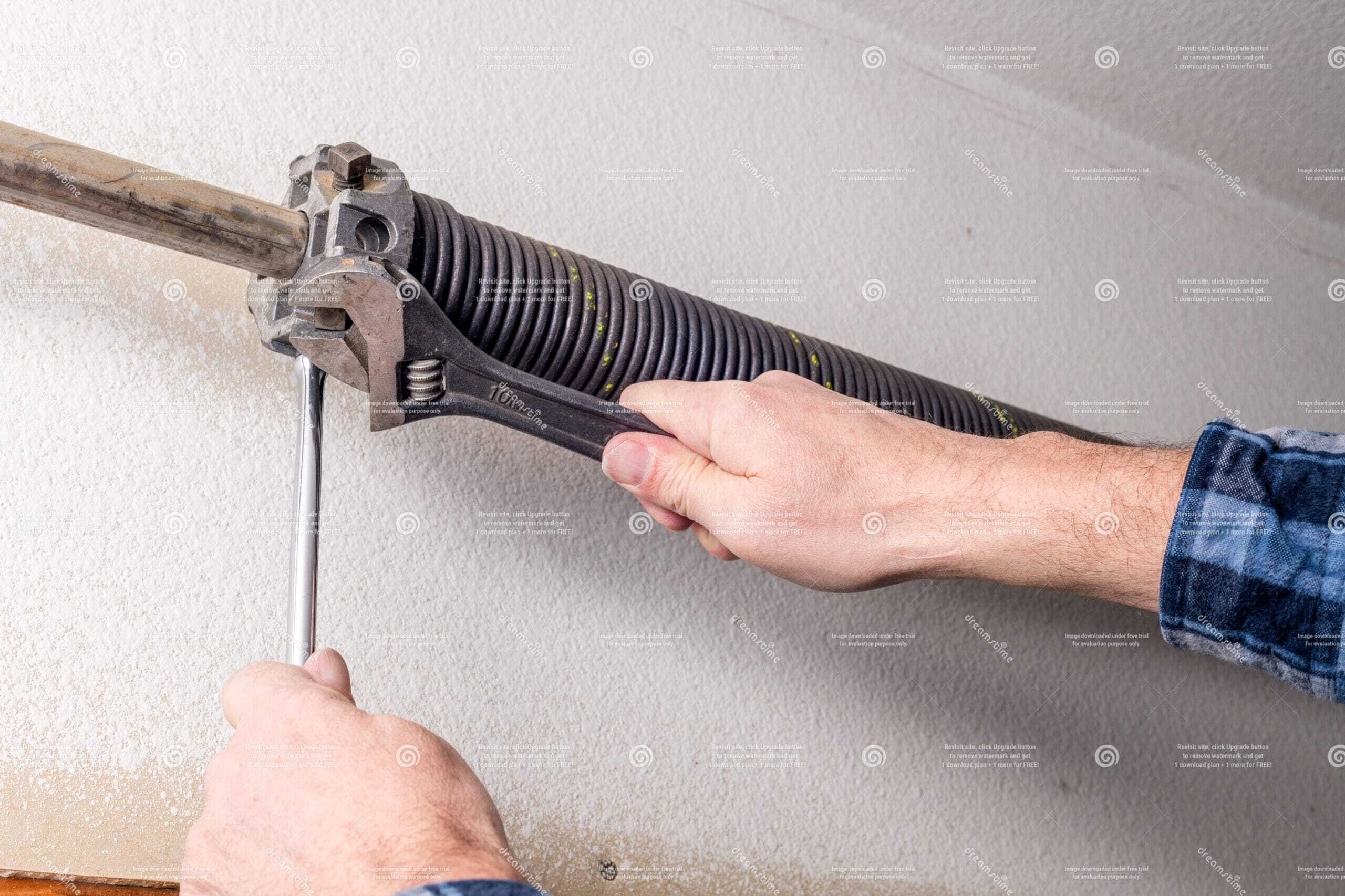
Your springs do the heavy lifting, not the opener. When a spring breaks, the door suddenly weighs a few hundred pounds, and the opener may strain, stall, or close the door crooked. Common signs: a loud bang from the garage earlier, a visible gap in the torsion spring above the door, a cable hanging loose, or a door that feels extremely heavy.
If you suspect a broken spring, stop using the opener. Read our guide on what to do when your garage door spring breaks, and see our same-day garage door spring replacement service.
8. The opener itself is failing
If the sensors check out, the door moves freely by hand, and the springs are intact, the problem is likely inside the opener. A motor that hums but doesn’t move often points to a stripped drive gear or a failed capacitor. An opener that’s completely dead after a thunderstorm may have a surge-damaged logic board. With how often lightning rolls through Orlando in the summer, we see that one a lot.
Many of these are very repairable. If your opener is 10 to 15 years old or older, though, it may make more sense to put that money toward a new garage door opener with battery backup and modern safety features. We’ll give you an honest take either way.
How to close the door by hand (safely)
If you need to secure the house tonight and the opener won’t cooperate, most doors can be closed manually:
- Check the springs first. If a spring is broken, do not pull the release. The door can come down hard and fast. Call a technician instead.
- Unplug the opener so it can’t start moving while you work.
- Pull the red emergency release cord to disconnect the door from the opener.
- Lower the door slowly by the handle, ideally with two people, keeping fingers away from the joints between panels.
- Lock it with the manual slide lock if your door has one.
Once the problem is fixed, plug the opener back in and run it. On most models the trolley will reconnect to the door automatically.
DIY or call a pro? A quick guide
| What you’re seeing | Likely cause | DIY or pro? |
|---|---|---|
| Sensor light blinking or off | Dirty or misaligned sensor | DIY |
| Only fails in the late afternoon | Sun glare on the sensor | DIY or quick pro fix |
| Closes only while holding the wall button | Sensor fault | DIY check, then pro |
| Touches the floor, then reverses | Close-limit or force setting | Pro recommended |
| Grinding, jerking, or closes crooked | Track, roller, or hinge problem | Pro |
| Loud bang, door very heavy | Broken spring or cable | Pro. Stop using the opener |
| Opener hums but won’t move | Drive gear or capacitor | Pro |
| Dead after a storm | Surge-damaged logic board | Pro |
Garage door opener repair across Orlando
Grade A Garage Doors has been fixing garage doors and openers across Orlando since 2012. We work on all major brands, including LiftMaster, Chamberlain, and Genie, we give you an upfront price before any work starts, and we’re available 7 days a week, 7am to 7pm.
We serve homeowners throughout the metro, including Lake Nona, Winter Park, Oviedo, Baldwin Park, and Maitland.
See our garage door opener repair service →
Or call (407) 285-4220, 7 days a week, 7am–7pm.
Frequently Asked Questions: Garage Door Won’t Close
Why does my garage door go down and then back up?
The most common reason is a blocked, dirty, or misaligned safety sensor. The opener thinks something is in the way and reverses. If the sensors check out, the close-limit or force setting may be off, or a track or roller problem is creating resistance the opener reads as an obstruction.
Why does my garage door only close when I hold the wall button?
On most openers, holding the wall button down overrides a sensor fault so you can still close the door. If that is the only way it will close, the sensors are blocked, misaligned, blinded by sunlight, or have a wiring problem. Never disconnect or remove the sensors. They are a required safety device.
Can sunlight really stop my garage door from closing?
Yes. Strong, low-angle sunlight shining into the receiving sensor can overwhelm the beam, especially on west-facing garages in the late afternoon. Swapping the sensor positions or adding a sun shield usually solves it.
Is it safe to close my garage door by hand?
Usually, as long as the springs are intact. Unplug the opener, pull the red emergency release, and lower the door slowly with two people. If a spring is broken, do not pull the release. The door can drop suddenly. Call a technician instead.
Should I repair or replace my garage door opener?
If your opener is less than about 10 years old and the problem is a sensor, gear, or board, repair usually makes sense. If it is 10 to 15 years old or more, parts are hard to find, or the repair approaches half the cost of a new unit, a new opener with battery backup is often the better value.